
Note: Read-only source code mirror of most Proxmox Open Source projects. Check https://git.proxmox.com/ for the full list of official repositories.
- Proxmox VE: https://pve.proxmox.com/pve-docs/
- Proxmox Backup Server: https://pbs.proxmox.com/docs/
- Proxmox Mail Gateway: https://pmg.proxmox.com/pmg-docs/


ist of open source real-time operating systems
iPXE is the leading open source network boot firmware. It provides a full PXE implementation enhanced with additional features such as:
- boot from a web server via HTTP
- boot from an iSCSI SAN
- boot from a Fibre Channel SAN via FCoE
- boot from an AoE SAN
- boot from a wireless network
- boot from a wide-area network
- boot from an Infiniband network
- control the boot process with a script
You can use iPXE to replace the existing PXE ROM on your network card, or you can chainload into iPXE to obtain the features of iPXE without the hassle of reflashing.
iPXE is free, open-source software licensed under the GNU GPL (with some portions under GPL-compatible licences), and is included in products from several network card manufacturers and OEMs.
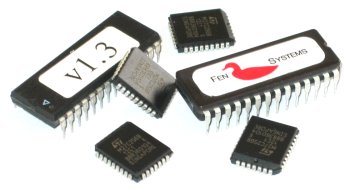
Compared to software, the open source approach is relatively new to most actors in the field of (mechanical) hardware. Plus Open Source Hardware faces some special issues. A yet missing definition of its "source code" is one of them (+ patent law, liability, engineers that do not know how to work with git, costly prototyping…).
DIN SPEC 3105 will be/is the first official standard for Open Source Hardware and also the first official standard ever published under a free license (CC-BY-SA 4.0; that was a lot of lobby work ;) ). It defines the technology-specific "source" of Open Source Hardware and aims to build a bridge between research institutes, public authority, industry and the worldwide open source community.
In this talk I won't explain why Open Source (Hardware) is great. I assume, you all know that (if not, still feel free to ask me in the Q&A part or after the talk). I'll describe what's the standard for, how it works and why its great for Open Source Hardware.
In meinem Youtube Channel möchte ich euch Videos und Tutorials über freie oder quelloffene CAD, FEM und CFD Software zeigen. Ich hoffe, ich kann damit dem einen oder anderen helfen, Open Source Engineering Software zu nutzen.
Viel Spaß bei meinen Videos und ein riesen Dank an die Entwickler!


Ansible Builder is a tool that automates the process of building execution environments using the schemas and tooling defined in various Ansible Collections and by the user.
Der Verlag Open Source Press hat zum 31.12.2015 den Betrieb eingestellt und sämtliche Rechte an den veröffentlichten Texten an die Autoren zurückübertragen. Wir haben uns entschieden, den vollen Text des Buches sowie die AsciiDoc-Quellen unter einer CreativeCommons-Lizenz frei zugänglich zu machen. Alternativ zu der Online-HTML-Version gibt es eine PDF- und EPUB-Version.
Außerdem haben wir die Quellmaterialien der Foliensätze, die wir die vergangenen Jahre für firmeninterne Schulung benutzt haben, auch unter einer CC-Lizenz veröffentlicht. Zusammen mit dem Buch stellen sie eine umfassende Materialsammlung zum Erlernen und Lehren von Git dar.
Fragen, Kritik, Anmerkungen? – Wir freuen uns über E-Mails an kontakt@gitbu.ch!

Zuul is a Project Gating System. That’s like a CI or CD system, but the focus is on testing the future state of code repositories.
A gating system doesn’t just test a proposed change; it tests the proposed future state of multiple branches and repositories with any number of in-flight changes and their dependencies. And the same playbooks used to test software can also be used to deploy it.
Zuul itself is a service which listens to events from various code review systems, executes jobs based on those events, and reports the results back to the code review system. The primary interface for Zuul is the code review system (or systems) so that it fits seamlessly into developer workflows, and a web interface is available for inspecting the current status and browsing build results.
The best way to run Zuul is with a single installation serving as many projects or groups as possible. It is a multi-tenant application that is able to provide as much or as little separation between projects as desired.
This document gives coding conventions for the Python code comprising the standard library in the main Python distribution. Please see the companion informational PEP describing style guidelines for the C code in the C implementation of Python 1.
This document and PEP 257 (Docstring Conventions) were adapted from Guido’s original Python Style Guide essay, with some additions from Barry’s style guide 2.
This style guide evolves over time as additional conventions are identified and past conventions are rendered obsolete by changes in the language itself.
Many projects have their own coding style guidelines. In the event of any conflicts, such project-specific guides take precedence for that project.
Handling own exception class
When you raise an exception from within an except block in Python, you have three options:
- If a new/unexpected exception occurs in the code handling the original exception, raise NewException.
- If you want to wrap the original exception(s) (e.g., with a common base exception to reduce complexity for your users), raise NewException from cause.
- If you want to hide the original exception because it is irrelevant for your users, raise NewException from None.
Wayland is the next-generation display server for Unix-like systems, designed and built by the alumni of the venerable Xorg server, and is the best way to get your application windows onto your user's screens. Readers who have worked with X11 in the past will be pleasantly surprised by Wayland's improvements, and those who are new to graphics on Unix will find it a flexible and powerful system for building graphical applications and desktops.
This book will help you establish a firm understanding of the concepts, design, and implementation of Wayland, and equip you with the tools to build your own Wayland client and server applications. Over the course of your reading, we'll build a mental model of Wayland and establish the rationale that went into its design. Within these pages you should find many "aha!" moments as the intuitive design choices of Wayland become clear, which should help to keep the pages turning. Welcome to the future of open source graphics!
Notice: this is a draft. Chapters 1-10 are more or less complete, but may be updated later. Chapters 11 forward in large part remain to be written.
TODO
- Expand on resource lifetimes and avoiding race conditions in chapter 2.4
- Move linux-dmabuf details to the appendix, add note about wl_drm & mesa
- Rewrite the introduction text
- Add example code for interactive move, to demonstrate the use of serials
- Use — instead of - where appropriate
- Prepare PDFs and EPUBs

A Terraform provider serving as an interop layer for an Ansible dynamic inventory script.
Read the introductory blog post for an explanation of the design motivations behind this provider.
uMap lets you create maps with OpenStreetMap layers in a minute and embed them in your site. Because we think that the more OSM will be used, the more OSM will be improved. It uses django-leaflet-storage and Leaflet.Storage, built on top of Django and Leaflet.
B612 is an highly legible open source font family designed and tested to be used on aircraft cockpit screens.
I recently worked on creating a bash completion script for one of my toy projects and I enjoyed it very much.
After starting your first Python project, you might realize that it is actually not that obvious to be consistent with the way you write Python code. If you collaborate with other developers, your code style might differ, and the code can become somehow unreadable.