Deliver fully-managed clusters at scale everywhere with your own Gardener installation


cowsql (/ˈkaʊ,siːkwəl/ listen) is a C library that implements an embeddable and replicated SQL database engine with high availability and automatic failover.
cowsql extends SQLite with a network protocol that can connect together various instances of your application and have them act as a highly-available cluster, with no dependency on external databases.
The name "cowsql" loosely refers to the "pets vs. cattle" concept, since it's generaly fine to delete or rebuild a particular node of an application that uses cowsql for data storage.


Talos Linux is a modern Linux distribution built for Kubernetes.
Talos Linux is Linux designed for Kubernetes – secure, immutable, and minimal.
- Supports cloud platforms, bare metal, and virtualization platforms
- All system management is done via an API. No SSH, shell or console
- Production ready: supports some of the largest Kubernetes clusters in the world
- Open source project from the team at Sidero Labs
Github: Talos releases


k3s ist eine schlanke Variante zum vollen Kubernetes (k8s) Stack. Der k3s Cluster lässt sich daher mit wenigen Schritten installieren und einrichten. Dieses Tutorial beschreibt dir wie du den k3s Cluster installieren kannst.
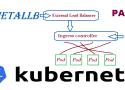
Running a Kubernetes Cluster in your own data center on Bare Metal hardware can be lots of fun but also can be challenging. One of the changeless are exposing your service to an external Load Balancer, Kubernetes does not offer an implementation of an external load-balancer for bare metal cluster implementations. The Kubernetes implementations of Network Load Balancers are only available on specific Cloud Providers like AWS, GCP, Azure, etc.. and is enabled by specifying the –cloud-provider= option. leaving a gap/challenge if you create your own Bare Metal Kubernetes Cluster. While their are many workarounds to address this issue most of them are not perfect and have their own list of challenges. while I was looking for a for a solution, most recently came across a project called MetalLB, at first I was quite sceptical if its going to work, but after testing this for a while I have to say, I am quite happy with the solution.
The Concepts section helps you learn about the parts of the Kubernetes system and the abstractions Kubernetes uses to represent your cluster, and helps you obtain a deeper understanding of how Kubernetes works.
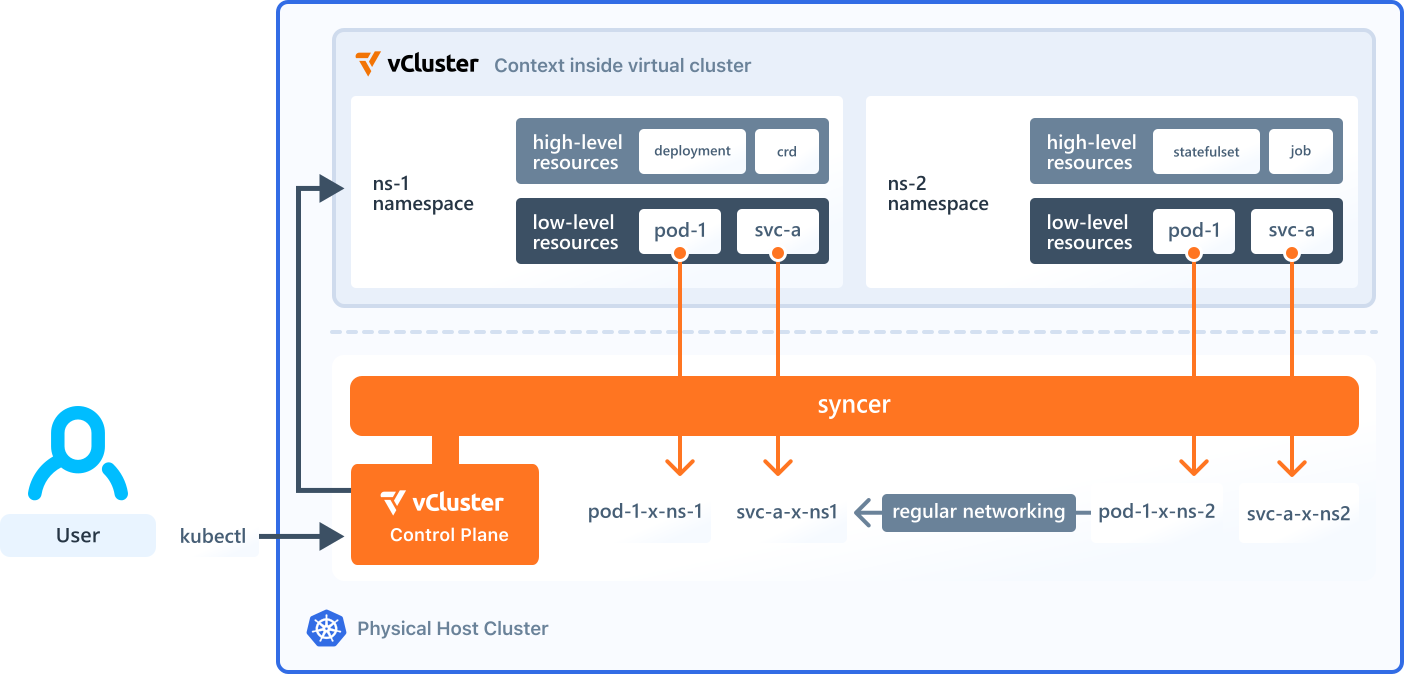
Virtual clusters are fully working Kubernetes clusters that run on top of other Kubernetes clusters. Compared to fully separate "real" clusters, virtual clusters do not have their own node pools. Instead, they are scheduling workloads inside the underlying cluster while having their own separate control plane.
Cluster API is a Kubernetes sub-project focused on providing declarative APIs and tooling to simplify provisioning, upgrading, and operating multiple Kubernetes clusters.
Started by the Kubernetes Special Interest Group (SIG) Cluster Lifecycle, the Cluster API project uses Kubernetes-style APIs and patterns to automate cluster lifecycle management for platform operators. The supporting infrastructure, like virtual machines, networks, load balancers, and VPCs, as well as the Kubernetes cluster configuration are all defined in the same way that application developers operate deploying and managing their workloads. This enables consistent and repeatable cluster deployments across a wide variety of infrastructure environments.
Kubermatic KubeOne automates cluster operations on all your cloud, on-prem, edge, and IoT environments. It comes as a CLI that allows you to manage the full lifecycle of your clusters, including installing and provisioning, upgrading, repairing, and unprovisioning your Kubernetes clusters.
Flux is a tool that automatically ensures that the state of a cluster matches the config in git. It uses an operator in the cluster to trigger deployments inside Kubernetes, which means you don't need a separate CD tool. It monitors all relevant image repositories, detects new images, triggers deployments and updates the desired running configuration based on that (and a configurable policy).
The benefits are: you don't need to grant your CI access to the cluster, every change is atomic and transactional, git has your audit log. Each transaction either fails or succeeds cleanly. You're entirely code centric and don't need new infrastructure.

Heute läuft der Server mit Ubuntu 20.04. Darauf laufen keine LXC/LXD Container mehr. Stattdessen läuft jetzt Kubernetes darauf. Zu Beginn nutzte ich für die Installation von Kubernetes Kubespray ein, das Standard-Kubernetes war allerdings deutlich zu fett. Größtes Manko war, dass das etcd verdammt viel auf die SSD geschrieben hat und ich regelmäßig bei jedem Upgrade das Setup kaputt gespielt habe. Für den Privatgebrauch ergab das so daher keinen Sinn.
Mittlerweile setze ich auf das vergleichsweise schlanke k3s.io. Das braucht im Heimbetrieb deutlich weniger Leistung und erledigt trotzdem das, was ich brauche. Statt etcd setzt es auf sqlite und statt Docker auf containerd.

If you have questions, check the documentation at kubespray.io and join us on the kubernetes slack, channel #kubespray. You can get your invite here
Can be deployed on AWS, GCE, Azure, OpenStack, vSphere, Packet (bare metal), Oracle Cloud Infrastructure (Experimental), or Baremetal
Highly available cluster
Composable (Choice of the network plugin for instance)
Supports most popular Linux distributions
Continuous integration testsThis article provides you a simple solution of how to setup a Kubernetes on multiple nodes using a tool called Ansible.
I really had no idea what I was getting into when I decided to build a Kubernetes Pi cluster, or if it would even work. The response on Twitter was absolutely overwhelming and flattering too! As promised, I've decided to document my findings so that anyone/everyone can enjoy the same setup.
Warning: This post is long. While working through this massive server upgrade/migration process, tears were shed, many cuss words were said, along with a general feeling of frustration, which ultimately culminated into extreme happiness once the migration was completed. The scale and complexity of the implementation factor into the length of this post, and I’ll share my thought process on how this was executed, so here goes.
Manage pods, containers, and container images.
This is the first in a series of posts reviewing methods for MySQL master discovery: the means by which an application connects to the master of a replication tree. Moreover, the means by which, upon master failover, it identifies and connects to the newly promoted master.
These posts are not concerned with the manner by which the replication failure detection and recovery take place. I will share orchestrator specific configuration/advice, and point out where cross DC orchestrator/raft setup plays part in discovery itself, but for the most part any recovery tool such as MHA, replication-manager, severalnines or other, is applicable.
We discuss asynchronous (or semi-synchronous) replication, a classic single-master-multiple-replicas setup. A later post will briefly discuss synchronous replication (Galera/XtraDB Cluster/InnoDB Cluster).
OpenStack Swift is the massively scalable object storage of OpenStack. It can store billions of objects in a single cluster without any disturbances. But what happens if all of your objects are "small objects"?
Because OpenStack Swift stores objects as files on XFS, disks will end-up storing millions of small files, creating large performance and stability issues. This is all related to the constraints of POSIX filesystems.
During this presentation, we will give you an overview of these issues, and explain their root causes. You will then discover what we tried to overcome them, as well as the chosen solution. Eventually, we will present you results of our production deployment.