
Talos Linux is a modern Linux distribution built for Kubernetes.

Talos Linux is Linux designed for Kubernetes – secure, immutable, and minimal.
- Supports cloud platforms, bare metal, and virtualization platforms
- All system management is done via an API. No SSH, shell or console
- Production ready: supports some of the largest Kubernetes clusters in the world
- Open source project from the team at Sidero Labs
Github: Talos releases


Kubernetes is an open-source orchestration engine for automating deployments, scaling, managing, and providing the infrastructure to host containerized applications. At the infrastructure level, a Kubernetes cluster is comprised of a set of physical or virtual machines, each acting in a specific role.
The master machines act as the brain of all operations and are charged with orchestrating containers that run on all of the node machines. Each node is equipped with a container runtime. The node receives instruction from the master and then takes actions to either create pods, delete them, or adjust networking rules.
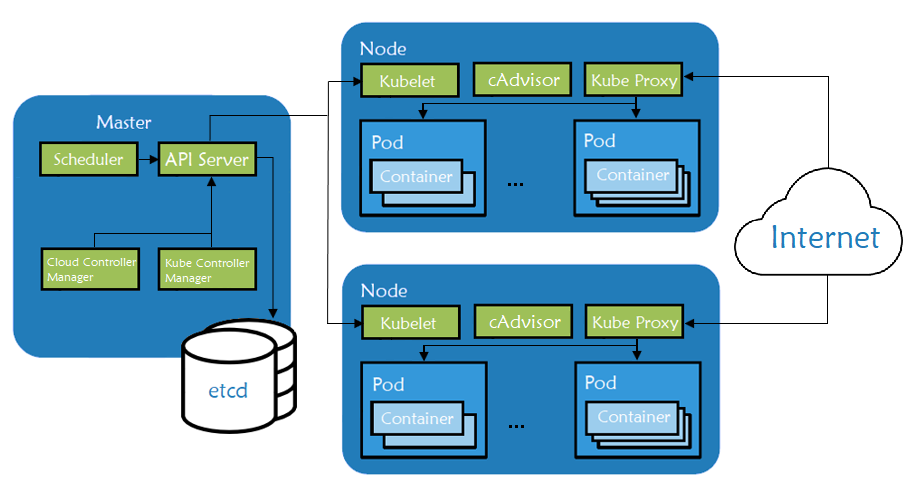
This page explains two different approaches to setting up a highly available Kubernetes cluster using kubeadm:
With stacked masters. This approach requires less infrastructure. etcd members and control plane nodes are co-located.
With an external etcd cluster. This approach requires more infrastructure. The control plane nodes and etcd members are separated.
Your clusters must run Kubernetes version 1.11 or later. You should also be aware that setting up HA clusters with kubeadm is still experimental. You might encounter issues with upgrading your clusters, for example. We encourage you to try either approach, and provide feedback.
tl;dr - Many people love 2-node clusters because they seem conceptually simpler and 33% cheaper, but while it’s possible to construct good ones, most will have subtle failure modes
The first step towards creating any HA system is to look for and try to eliminate single points of failure, often abbreviated as SPoF.