
Note: Read-only source code mirror of most Proxmox Open Source projects. Check https://git.proxmox.com/ for the full list of official repositories.
- Proxmox VE: https://pve.proxmox.com/pve-docs/
- Proxmox Backup Server: https://pbs.proxmox.com/docs/
- Proxmox Mail Gateway: https://pmg.proxmox.com/pmg-docs/



EOS is an open-source storage software solution to manage Exabyte storage for the CERN Large Hadron Collidor LHC. Core of the implementation is the XRootD framework providing a feature-rich remote access protocol.

ist of open source real-time operating systems
iPXE is the leading open source network boot firmware. It provides a full PXE implementation enhanced with additional features such as:
- boot from a web server via HTTP
- boot from an iSCSI SAN
- boot from a Fibre Channel SAN via FCoE
- boot from an AoE SAN
- boot from a wireless network
- boot from a wide-area network
- boot from an Infiniband network
- control the boot process with a script
You can use iPXE to replace the existing PXE ROM on your network card, or you can chainload into iPXE to obtain the features of iPXE without the hassle of reflashing.
iPXE is free, open-source software licensed under the GNU GPL (with some portions under GPL-compatible licences), and is included in products from several network card manufacturers and OEMs.
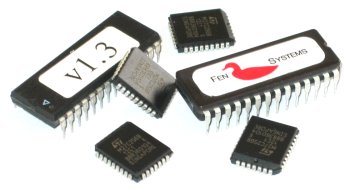
Compared to software, the open source approach is relatively new to most actors in the field of (mechanical) hardware. Plus Open Source Hardware faces some special issues. A yet missing definition of its "source code" is one of them (+ patent law, liability, engineers that do not know how to work with git, costly prototyping…).
DIN SPEC 3105 will be/is the first official standard for Open Source Hardware and also the first official standard ever published under a free license (CC-BY-SA 4.0; that was a lot of lobby work ;) ). It defines the technology-specific "source" of Open Source Hardware and aims to build a bridge between research institutes, public authority, industry and the worldwide open source community.
In this talk I won't explain why Open Source (Hardware) is great. I assume, you all know that (if not, still feel free to ask me in the Q&A part or after the talk). I'll describe what's the standard for, how it works and why its great for Open Source Hardware.
In meinem Youtube Channel möchte ich euch Videos und Tutorials über freie oder quelloffene CAD, FEM und CFD Software zeigen. Ich hoffe, ich kann damit dem einen oder anderen helfen, Open Source Engineering Software zu nutzen.
Viel Spaß bei meinen Videos und ein riesen Dank an die Entwickler!


Back up your database when you open KeePass
The OpenTelekomCloud provider is used to interact with the many resources supported by OpenTelekomCloud. The provider needs to be configured with the proper credentials before it can be used.
B612 is an highly legible open source font family designed and tested to be used on aircraft cockpit screens.
Pleroma is a free, federated social networking server built on open protocols. It is compatible with GNU Social, Mastodon, and many other ActivityPub and OStatus implementations.
The project consists of several components: Pleroma is the server implementation, and comes bundled with PleromaFE, the default frontend. Other useful utilities are also provided, such as an ActivityPub relay.
Open Camera is an Open Source Camera app for Android phones and tablets. Features:
Option to auto-level so your pictures are perfectly level no matter what.
Expose your camera's functionality: support for focus modes, scene modes, color effects, white balance, ISO, exposure compensation/lock, face detection, torch, antibanding.
Video recording (including HD, taking photos while recording video, time lapse).
Handy remote controls: timer (with optional voice countdown), auto-repeat mode (with configurable delay).
Option to take photo remotely by making a noise (e.g., voice, whistle), or by voice command "cheese".
Configurable volume keys.
Optimise GUI for left or right-handed users.
Zoom via multi-touch gesture and single-touch control.
Option to lock orientation to portrait or landscape for photo or video. Upside-down preview option for use with attachable lenses.
Choice of save folder (including support for Storage Access Framework).
Disable shutter sound.
Overlay a choice of grids and crop guides.
Optional GPS location tagging (geotagging) of photos and videos; for photos this includes compass direction (GPSImgDirection, GPSImgDirectionRef).
Apply date and timestamp, location coordinates, and custom text to photos; store date/time and location as video subtitles (.SRT).
Yes you can take a selfie (also known as front camera), includes support for "screen flash".
Support for (some) external microphones.
Widget to automatically take a photo after launching.
Support for HDR (with auto-alignment and ghost removal) and Exposure Bracketing.
Support for Camera2 API: manual focus distance; manual ISO; manual exposure time; manual white balance temperature; burst mode; RAW (DNG) files; slow motion video.
Dynamic range optimisation mode for better quality photos.
Support for Mi Band 2 & Amazfit Selfie.
Small file size.
Completely free, and no ads in the app. Open Source.Design and implementation of an open-hardware, open-software Uninterruptible Power Supply unit.
Open Routing, OpenR, is Facebook's internally designed and developed routing protocol/platform. Originally built for performing routing on the Terragraph network, its awesome design and flexibility have led to its adoption in other networks at Facebook including our new WAN network, Express Backbone.
The Open GApps Project is an open-source effort to script the automatic generation of up-to-date Google Apps packages.
On OpenGApps.org you can find more information about the project effort and also pre-built Google Apps packages generated by the OpenGApps.org buildbot.
The linux-based open-source mobile operating system Android is not only the most popular mobile operating system in the world, it’s also on the way to becoming a proprietary operating system. How is that?
While the core operating system is still released as part of the Android Open Source Project, the majority of core apps are not. It gets worse: More and more libraries and APIs are only available on phones that run various Google apps pre-installed, effectively locking third-party apps to the Google ecosystem. For these reasons Android is described as being a “look but don’t touch” kind of open.
At this point, several popular open-source applications like the secure messenger Signal already require some of Google’s proprietary libraries to be installed. Increasing demand in the free software community in addition to severe problems in Google’s proprietary software discovered by the Android modding community, have led to the development of a free software clone of Google’s proprietary core libraries and applications - the microG Project was born.
Although most microG components are far from complete, users are amazed by the results. Free software users got extended application support, privacy-caring users can reduce or monitor data that is sent to Google and especially older phones can expect some battery life improvements. microG is not only used on real devices, but also replaces Google tools in test emulators and is even used in virtual mobile infrastructure.
RISC-V (pronounced "risk-five") is a new instruction set architecture (ISA) that was originally designed to support computer architecture research and education and is now set to become a standard open architecture for industry implementations under the governance of the RISC-V Foundation. The RISC-V ISA was originally developed in the Computer Science Division of the EECS Department at the University of California, Berkeley.
Open Networking Solution are based on open standard, bare-metal hardware with a choice of independent open software for NOS (Network Operating Systems), SDN, virtualization, and cloud orchestration. For years, hyper-scale data center operators have been enjoying the benefits of Open Networking Solution: reduced network equipment expenses, automated and accelerated provisioning of network capacity and services, greater control over the development of enhanced network services, flexibility to work with best-in-class suppliers, and reduced operating expenses.
These Open Networking benefits are now available for many more networking use cases. Public and private cloud data centers of all sizes are being deployed with network fabric built from open leaf and spine switches. Edgecore Networks offers choices of hardware to meet open network deployment, from 1G, 10G, 25G and 40G, to 100G.