
his article shows how to install Python 3, pip, venv, virtualenv, and pipenv on Red Hat Enterprise Linux 7. After following the steps in this article, you should be in a good position to follow many Python guides and tutorials using RHEL. Note: For RHEL 8 installs, See Python on RHEL 8.
Using Python virtual environments is a best practice to isolate project-specific dependencies and create reproducible environments. Other tips and FAQs for working with Python and software collections on RHEL 7 are also covered.
There are a number of different ways to get Python 3 installed on RHEL. This article uses Red Hat Software Collections because these give you a current Python installation that is built and supported by Red Hat. During development, support might not seem that important to you. However, support is important to those who have to deploy and operate the applications you write. To understand why this is important, consider what happens when your application is in production and a critical security vulnerability in a core library (for example SSL/TLS) is discovered. This type of scenario is why many enterprises use Red Hat.
Python 3.6 is used in this article. It was the most recent, stable release when this was written. However, you should be able to use these instructions for any of the versions of Python in Red Hat Software Collections including 2.7, 3.4, 3.5, and future collections such as 3.7.
Using Ansible content that depends on non-default dependencies can be tricky. Packages must be installed on each node, play nicely with other software installed on the host system, and be kept in sync.
To help simplify this process, we have introduced the concept of Execution Environments, which you can create with Ansible Builder.

Ansible Builder is a tool that automates the process of building execution environments using the schemas and tooling defined in various Ansible Collections and by the user.
Hello and welcome to another introductory Ansible blog post, where we'll be covering a new command-line interface (CLI) tool, Ansible Builder. Please note that this article will cover some intermediate-level topics such as containers (Ansible Builder uses Podman by default), virtual environments, and Ansible Content Collections. If you have some familiarity with those topics, then read on to find out what Ansible Builder is, why it was developed, and how to use it.
This project is currently in development upstream on GitHub and is not yet part of the Red Hat Ansible Automation Platform product. As with all Red Hat software, our code is open and we have an open source development model for our enterprise software. The goal of this blog post is to show the current status of this initiative, and start getting the community and customers comfortable with our methodologies, thought process, and concept of Execution Environments. Feedback on this upstream project can be provided on GitHub via comments and issues, or provided via the various methods listed on our website. There is also a great talk on AnsibleFest.com, titled “Creating and Using Ansible Execution Environments,” available on-demand, which can provide additional clarification.


s part of a Red Hat Ansible Automation Platform subscription, customers have access to supported versions of on-premise packages, as well as hosted services provided on console.redhat.com. Red Hat provides a published product life cycle for Ansible Automation Platform so that customers and partners can properly plan, deploy, support, and maintain their on-premise automation clusters as well as hosted services that they use as part of the Ansible Automation Platform subscription.
This life cycle encompasses stated time periods for each version of Ansible Automation Platform, which is a logical grouping of many individual product components. The life cycle for each version of Ansible Automation Platform is split into production phases, each identifying the various levels of maintenance over a period of time from the initial release date. While multiple versions of Ansible Automation Platform may be supported at any one time, note that this life cycle applies to each specific version of Ansible Automation Platform and does not apply to (for example) the 1.x or 2.x major version as a whole. That is, semantic versioning rules are not used as part of Ansible Automation Platform releases (but specific contained components may).
Customers are expected to upgrade their Ansible Automation Platform environments to the most current supported version of the product in a timely fashion. Features and bug fixes target only the latest versions of the product, though some allowance may be given for high security risk items.
Die folgenden Einstellungen benötigen Sie, wenn Sie einen SIP-fähigen Software-Client oder Ihr Handy oder den Router eines anderen Anbieters für die Internettelefonie nutzen möchten.
Mit den Routern der Telekom, die für den IP-basierten Anschluss optimiert sind, benötigen Sie diese Einstellungen nicht.
Wir bieten Ihnen hier keine detaillierte Konfigurationsanleitung, da es eine sehr große Anzahl an unterschiedlichen Soft,- und Hardware-Clients gibt.
Dafür erhalten Sie in der folgenden Übersicht aber alle erforderlichen Angaben, um jeden üblichen Client einzurichten.
This model features a unique modular interior for outstanding configurability
Compact, modular interior
Minimalistic design with an elegant aluminum front panel
Unique new modular mounting system that accommodates up to six hard drives
This article describes one approach to setting up a GitLab CI/CD pipeline for testing and deploying Ansible content.
This wiki is intended to hold documentation of any kind about GNU Bash. The main motivation was to provide human-readable documentation and information so users aren't forced to read every bit of the Bash manpage - which can be difficult to understand. However, the docs here are not meant as a newbie tutorial.
This wiki and any programs found in this wiki are free software: you can redistribute it and/or modify it under the terms of the GNU General Public License as published by the Free Software Foundation, either version 3 of the License, or (at your option) any later version.
This wiki and its programs are distributed in the hope that it will be useful, but WITHOUT ANY WARRANTY; without even the implied warranty of MERCHANTABILITY or FITNESS FOR A PARTICULAR PURPOSE. See the GNU General Public License for more details.
You should have received a copy of the GNU General Public License along with this program. If not, see http://www.gnu.org/licenses/.
What would YOU like to see here? (outdated and locked, please use the discussions)
Stranger! Feel free to register and comment or edit the contents. There is a Bash Hackers Wiki needs love page that lists some things to do. The registration is only there to prevent SPAM.
Five years after this sleeper hit took on the world of IT and flipped it on its head, the 5th Anniversary Edition of The Phoenix Project continues to guide IT in the DevOps revolution. In this newly updated and expanded edition of the bestselling The Phoenix Project, co-author Gene Kim includes a new afterword and a deeper delve into the Three Ways as described in The DevOps Handbook. Whether you're revisiting Bill and his intrepid team of IT mavens or encountering the book for the first time, this updated classic will guide readers through their DevOps journey and help propel their teams into the future or IT.
Five years after this sleeper hit took on the world of IT and flipped it on its head, the 5th Anniversary Edition of The Phoenix Project continues to guide IT in the DevOps revolution. In this newly updated and expanded edition of the bestselling The Phoenix Project, co-author Gene Kim includes a new afterword and a deeper delve into the Three Ways as described in The DevOps Handbook. Bill, an IT manager at Parts Unlimited, has been tasked with taking on a project critical to the future of the business, code named Phoenix Project. But the project is massively over budget and behind schedule. The CEO demands Bill must fix the mess in ninety days or else Bill's entire department will be outsourced. With the help of a prospective board member and his mysterious philosophy of The Three Ways, Bill starts to see that IT work has more in common with a manufacturing plant work than he ever imagined. With the clock ticking, Bill must organize work flow streamline interdepartmental communications, and effectively serve the other business functions at Parts Unlimited. In a fast-paced and entertaining style, three luminaries of the DevOps movement deliver a story that anyone who works in IT will recognize. Readers will not only learn how to improve their own IT organizations, they'll never view IT the same way again.

With The Phoenix Project we learned about the Three Ways. Now with The Unicorn Project, Gene Kim introduces the Five Ideals.
This highly anticipated follow-up to the bestselling title The Phoenix Project takes another look at Parts Unlimited, this time from the perspective of software development.
In The Unicorn Project, we follow Maxine, a senior lead developer and architect, as she is exiled to the Phoenix Project, to the horror of her friends and colleagues, as punishment for contributing to a payroll outage. She tries to survive in what feels like a heartless and uncaring bureaucracy and to work within a system where no one can get anything done without endless committees, paperwork, and approvals.
One day, she is approached by a ragtag bunch of misfits who say they want to overthrow the existing order, to liberate developers, to bring joy back to technology work, and to enable the business to win in a time of digital disruption. To her surprise, she finds herself drawn ever further into this movement, eventually becoming one of the leaders of the Rebellion, which puts her in the crosshairs of some familiar and very dangerous enemies.
The Age of Software is here, and another mass extinction event looms―this is a story about “red shirt” developers and business leaders working together, racing against time to innovate, survive, and thrive in a time of unprecedented uncertainty...and opportunity.

Abstract
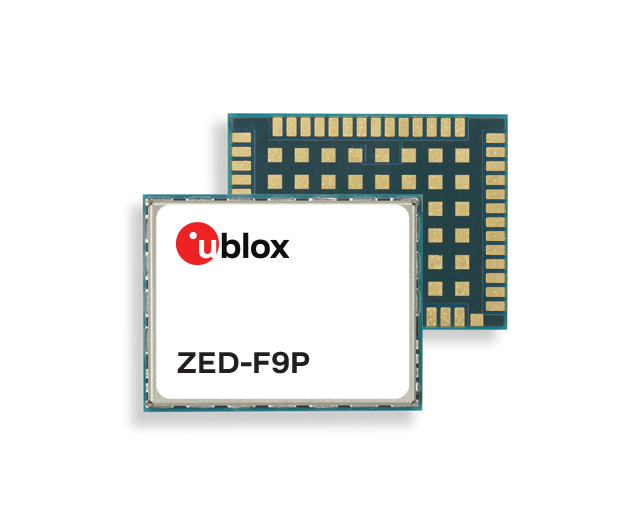
This data sheet describes the ZED-F9P high precision module with multi-band GNSS receiver. The module provides multi-band RTK with fast convergence times, reliable performance and easy integration of RTK for fast time-to-market. It has a high update rate for highly dynamic applications and centimeter-level accuracy in a small and energy-efficient module.
Ed25519 is a public-key signature system with several attractive features

OpenWISP is a modular network management system built on top of OpenWRT (but designed to allow supporting multiple embedded operating systems) that allows managing and automating several aspects of IT network deployment, monitoring and management:
- registration/provisioning of new nodes
- creation of VPN tunnels
- possibility of defining configuration templates and configuration variables to make the maintenance of configurations easier and faster
- possibility of configuring mesh networks as well as wireless access points using WPA2, WPA3, 802.1x (WPA enterprise) , WPS, WEP, multiple SSIDs, etc.
- possibility of deploying any network configuration supported by OpenWRT
- monitoring, collection of metrics, active checks, threshold definition and alerts
- RADIUS (eg: for wifi access / hotspot systems or ISPs)
- responsive captive page with features like user registration, SMS verification, social login
- firmware upgrades
- web and email notifications for important events happening in the network
- network topology visualization for mesh networks and VPN networks
The preceding list is not an exhaustive list but more like an overview of what OpenWISP can do.
Cool tlak about knowledge transfer between gererations, complexity and those stuff
Read the FAQ about the story.
The following is the 500-mile email story in the form it originally appeared, in a post to sage-members on Sun, 24 Nov 2002.: